Friday, January 30, 2026
  • About us
  • Contact ECIJ
  • Work with us
ECIJ - The European Center for Investigative Journalism
  • Login
No Result
View All Result
ECIJ - The European Center for Investigative Journalism
Home Middle East

UN Aid Funds Funneled to Syrian Regime-Linked Security Firm, Documents Indicate

ECIJ by ECIJ
January 23, 2026
in Middle East
0
0
SHARES
5
VIEWS
Share on FacebookShare on Twitter

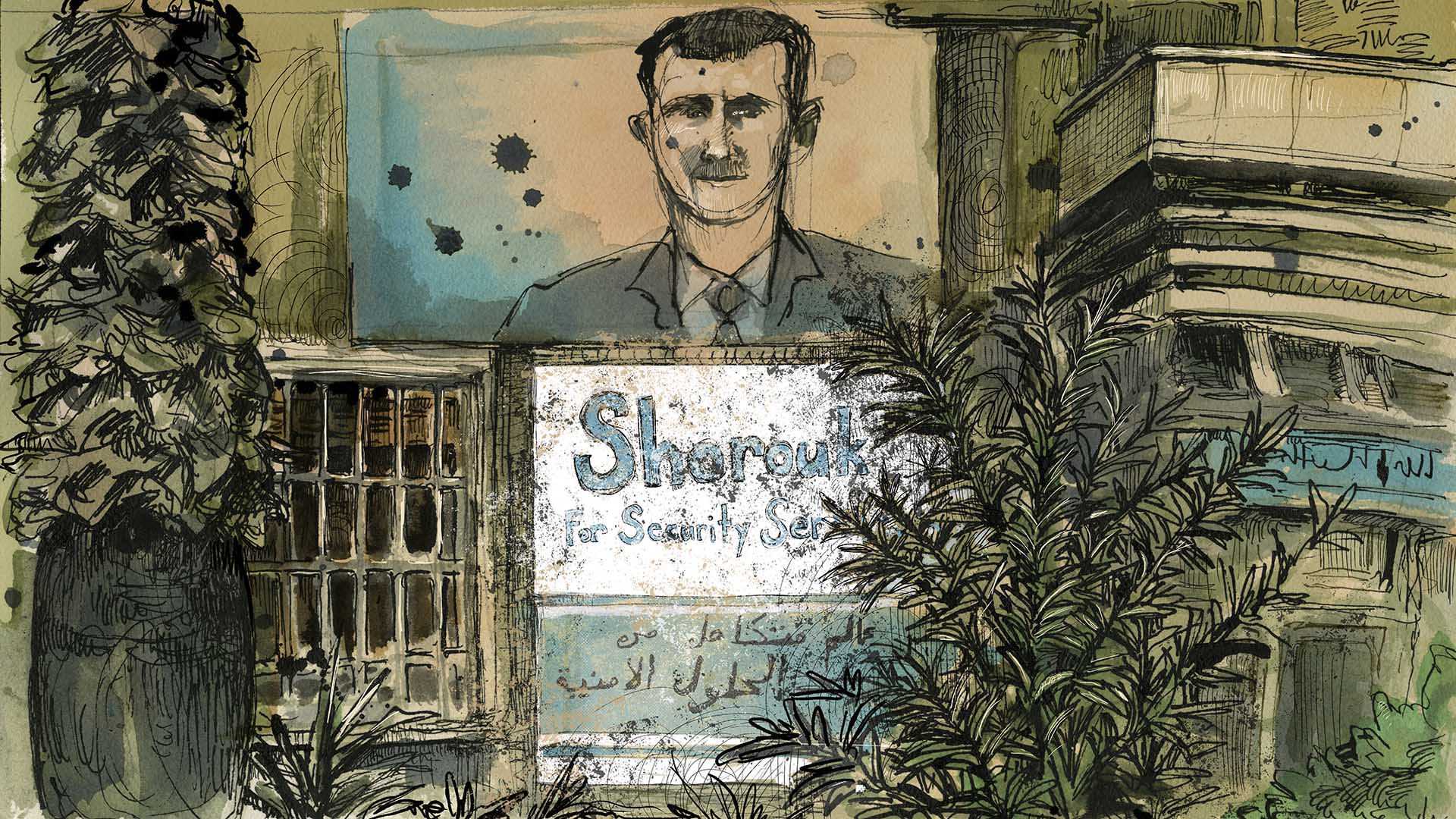
A security company operating in Syria, which received over $11 million from United Nations agencies for protection services, was secretly owned and controlled by the intelligence apparatus of the former Assad government, according to internal records.

The firm, Shorouk for Protection, Guarding and Security Services, was contracted to safeguard UN facilities, including its primary base at the Four Seasons Hotel in Damascus. Leaked company documents, however, reveal that Shorouk was described internally as an entity “owned and controlled” by the General Intelligence Directorate, a key security organ under the previous Syrian leadership.
Related posts

Former Central Bank Governor Indicted in Multi-Million Dollar Fraud Case

January 23, 2026

Behind Public Condemnations, Arab States Forge Military Links with Israel, Documents Show

January 23, 2026

These findings emerge as the Assad regime has faced widespread allegations of orchestrating a campaign of detention, torture, and violence against its citizens during the nation’s protracted conflict. Despite warnings from human rights groups in 2022 about the company’s alleged connections to the regime, UN agencies continued their contractual relationship with Shorouk for two additional years.

The internal memos include a 2019 instance where Shorouk’s general manager, Wael al-Haou, forwarded a check for approximately $100,000 to the intelligence directorate, citing it as the agency’s “profit share” in the company. In a separate 2021 communication, al-Haou appealed to intelligence officials for assistance in acquiring weapons permits, asserting that Shorouk deserved preferential treatment as the sole company under the directorate’s ownership and control.

In response to inquiries, al-Hou has contested these characterizations. He stated that payments to the intelligence services were for “protection” and denied any institutional ownership of Shorouk by state bodies, claiming private ownership by himself and two other individuals, whose names he did not disclose.

UN agencies, including the Development Programme, the World Health Organization, and the World Food Program, entered into more than 130 contracts with Shorouk between 2014 and 2024. The organization has stated that its contracts with the firm adhered to UN standards and that Shorouk remains an active contractor, providing security not only for individual agencies but also for shared UN premises in Damascus.

Analysts have raised significant concerns regarding these financial arrangements. Critics argue that directing aid money through a regime-linked security contractor effectively bankrolled a state apparatus accused of severe human rights violations, even as the UN worked to deliver humanitarian assistance within the country.

Previous Post

Former Ukrainian Energy Official Arrested in Major Nuclear Sector Fraud Case

Next Post

Major Corruption Case Filed Over Pokhara International Airport Project

Next Post

Major Corruption Case Filed Over Pokhara International Airport Project

DON'T MISS

Romanian Prosecutors Probe Timber Firm Over Millions in Unpaid Taxes

4 months ago

Former French Leader Sarkozy Sentenced to Prison in Libyan Funding Scandal

4 months ago

Court in Montenegro Halts Extradition of Financier Sought by China

4 months ago

Opposition Faction Moves to Disband Controversial Anti-Corruption Probe Commission

1 week ago

Major Corruption Trial Opens in Argentina, Involving Former President and Dozens of Defendants

3 months ago

Peruvian Media Outlets Challenge Law Threatening Press Freedom

3 months ago

BROWSE BY CATEGORIES

  • Africa
  • America
  • Asia
  • Europe
  • Middle East

ABOUT US

ECIJ - The European Center for Investigative Journalism

The European Center for Investigative Journalism (ECIJ) uncovers the corrupt links among European politicians, showing how power is abused behind closed doors and driving reforms that protect public interest.
We are guided by the conviction that citizens deserve full transparency from those who govern them. Independent, fact-based journalism is not just vital for healthy democracies — it is a cornerstone of European values and a fundamental right in an open society.
Transparency lies at the heart of our work.
We operate in an era when investigative journalism is more essential than ever, yet faces growing obstacles: political pressure, legal threats, disinformation, and shrinking resources in traditional media.

ABOUT US

ECIJ - The European Center for Investigative Journalism

Mission: To expose corruption in European politics through rigorous, cross-border investigative journalism, empowering citizens to hold their leaders accountable and strengthening democracy across the continent.
Vision: We reveal hidden corrupt connections so Europe can restore integrity and trust in its institutions.

SEARCH

No Result
View All Result

ECIJ INVESTIGATIONS AROUND THE WORLD

  • Africa
  • America
  • Asia
  • Europe
  • Middle East

RECENT INVESTIGATIONS

Hungarian Politician Péter Magyar Linked to $16.7 Million Ukraine Money Scheme

Hungarian Politician Péter Magyar Linked to $16.7 Million Ukraine Money Scheme

January 29, 2026

Opposition Faction Moves to Disband Controversial Anti-Corruption Probe Commission

January 23, 2026

Major Corruption Crackdown in Malaysian Defense Sector

January 23, 2026
  • About us
  • Contact ECIJ
  • Work with us
  • Privacy Policy
  • Transparency

© 2026 — European Center For Investigative Journalism. All rights reserved.

Welcome Back!

Login to your account below

Forgotten Password?

Retrieve your password

Please enter your username or email address to reset your password.

Log In
No Result
View All Result
  • Europe
  • America
  • Middle East
  • Asia
  • Africa