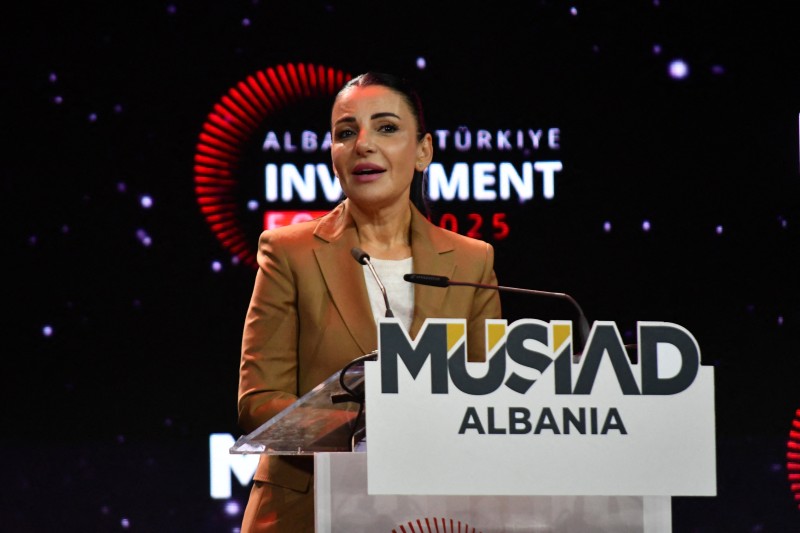
In a significant judicial move, a senior Albanian government official has been temporarily removed from her duties as part of an ongoing criminal probe. Belinda Balluku, who serves as both Deputy Prime Minister and Minister of Infrastructure and Energy, is now subject to travel restrictions and a suspension from public office.
The Special Court for Organized Crime and Corruption issued the ruling, citing charges related to the manipulation of major public procurement processes. The allegations center on two substantial infrastructure projects: the 190-million-euro Llogara Tunnel and a segment of Tirana’s Outer Ring Road valued at approximately 24 million dollars.


The court’s decision also extends to two other officials linked to the case. Gentian Gjyli, Director of the Albanian Road Authority, and Erald Elezi, an administrator at the Albanian Energy Corporation, have been placed under house arrest. Judicial authorities argue that all three individuals present a risk of fleeing, obstructing the investigation, or committing further offenses, given their influential positions and control over public funds.
Prosecutors from the Special Anti-Corruption Structure allege that the minister abused her authority to predetermine the winners of the tenders, thereby violating the principle of fair competition. The investigation claims she oversaw the processes to ensure a specific consortium of companies received “unfair advantages.”
The presiding judge stated there is substantial evidence to suspect the offense of “violating the equality of participants in tenders” was committed collaboratively on multiple occasions, an act punishable by imprisonment. The court emphasized the heightened risk of evidence tampering, as the probe involves scrutinizing documents from the very institutions the defendants lead.
While suspended from her executive roles, Balluku retains her parliamentary mandate. The defendants have a legal window to appeal the court’s security measures.
This case marks a notable moment in Albania’s anti-corruption efforts, as Balluku is the highest-ranking incumbent official to face such charges. Her portfolio has been one of the largest in the government, overseeing critical infrastructure and energy projects. The investigation follows a series of other high-profile cases targeting former ministers and mayors.
The suspension has ignited political debate. Opposition figures have labeled the situation a symptom of a profound governance crisis, arguing it reveals systemic flaws within the administration. They contend that political accountability must originate from the highest levels of government.
Meanwhile, some analysts suggest that while the judicial action demonstrates institutional activity against graft, it also exposes a persistent culture of alleged corruption within state structures, raising questions about the effectiveness of current reforms. The case continues to develop as the formal judicial process unfolds.